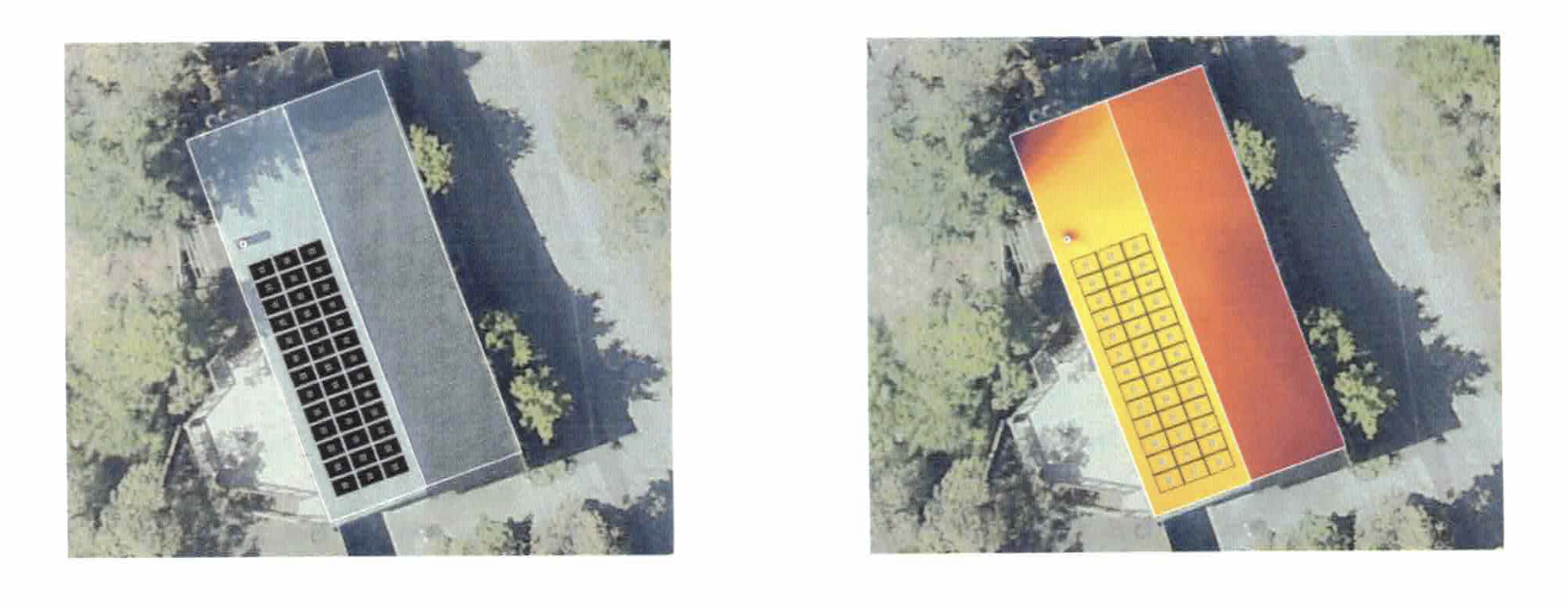
Rainshadow Solar proposes: 39 Hyundai 440 watt rooftop solar panels with 39 Enphase IQ8H microinverters
Total cost: $45,020
Materials deposit: $22,500
All solar components are WA sales tax exempt.
Hyundai and Enphase carry a 25-year warranty, including against power degradation over time.
Factors Potentially Affecting Costs
- Costs can likely be financed 100% through OPALCO's Switch It Up program, so Odd Fellows would be out no cash initially. Interest on the OPALCO loan is 3%. We are currently earning 3.5% on CDs or money market account at KeyBank.
- A monthly loan payment would be added to our electric bill.
- Under the Inflation Reduction Act (IRA), eligible nonprofits can claim a 30% federal tax credit for solar panel installations. Since tax-exempt organizations do not have tax liabilities, the IRS provides this incentive as a Direct Pay (or Elective Pay) program, meaning the nonprofit would receive the 30% credit as a cash refund. We are including this in our calculations below as a $13.5K credit at the end of the first year. (There is some time-sensitivity to this. See "Why Now Is the Best Time for Nonprofits to Go Solar")
- Electric rates are expected to rise 5-6% per year. Thus, the electricity produced by the panels becomes more valuable (in dollar amount) year by year.
- Our metal roof will likely need to be replaced some time in the next 15-25 years. If it's 25, it doesn't enter into these calculations. If it's less than 25, the cost of removing and reinstalling the panels will probably be around $4-5K.
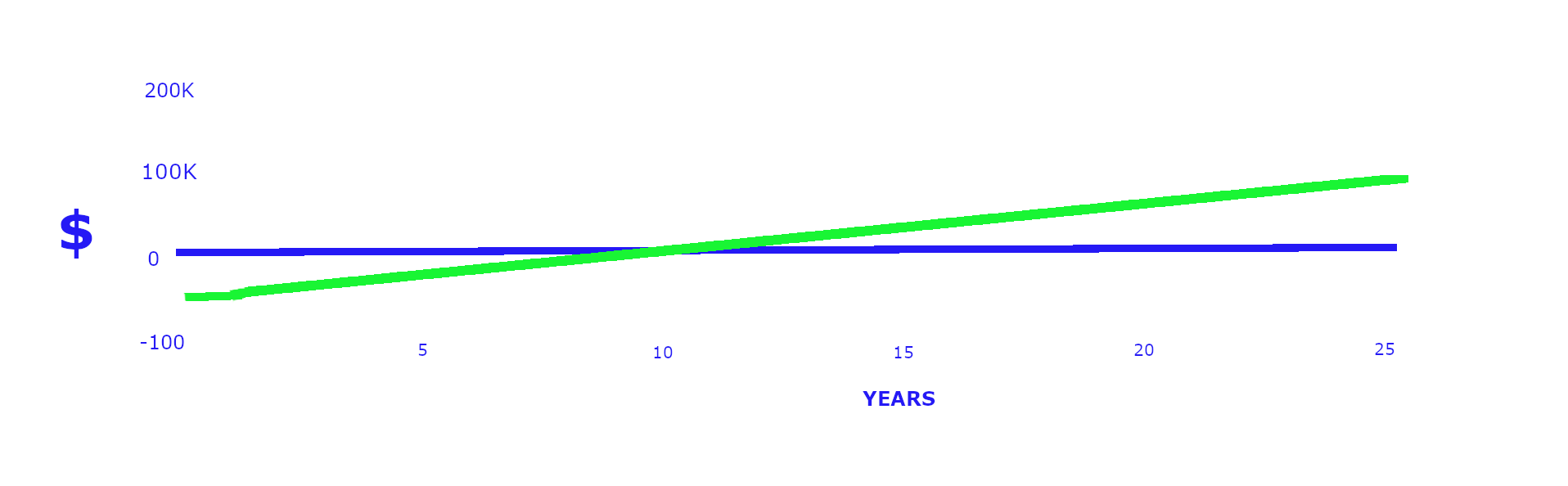
The chart below shows possible breakeven @ ~10 yrs, ~$100K saved @ 25 yrs
(assumes 5%/yr increase in electric rates and $13.5K credit at end of first year)
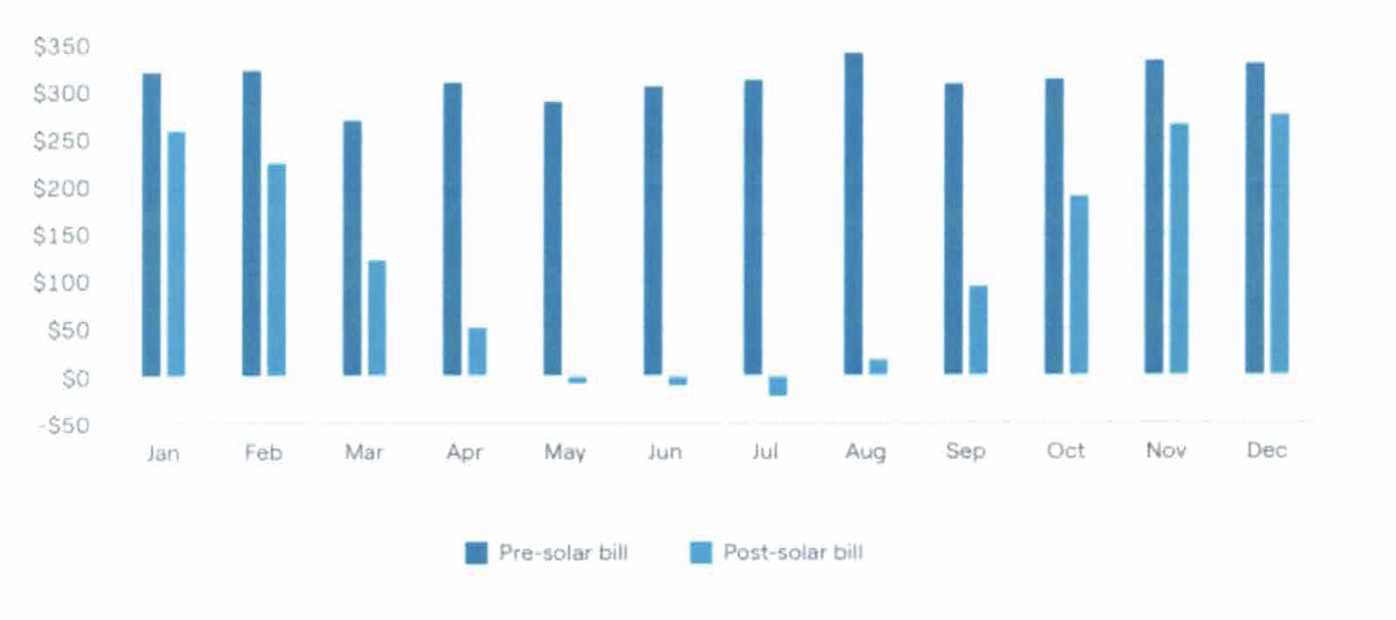
Possible reductions in monthly energy usage
- Weddings, classes and events might be able to continue during a power outage, increasing the quality of our service and perhaps preventing loss of rental income.
- Refrigeration should contnue to function, preventing losses due to food spoilage.
- The electric pump for the septic system would continue to function.
- It might be possible to obtain grants for battery-supported functions, such as feeding or sheltering islanders during an emergency.
We are still investigating whether battery storage has the potential to save us significant amounts of money, perhaps by smoothing out our usage, thus reducing or eliminating "demand charges." (These are charges added to our bill based on our peak demand – the maximum amount of power we use at any one time during a billing period.)
We're also looking into the possibility of getting financial support through the lodging tax.
Possible advantages of battery storage:
Unlike gas or propane generators, solar battery backup is virtually maintenance-free, with no moving parts or combustible fuel.
Click below for details of the Rainshadow Solar proposal.
panels
battery
Questions? Contact Michael Hurwicz, mhurwicz(at)gmail.com